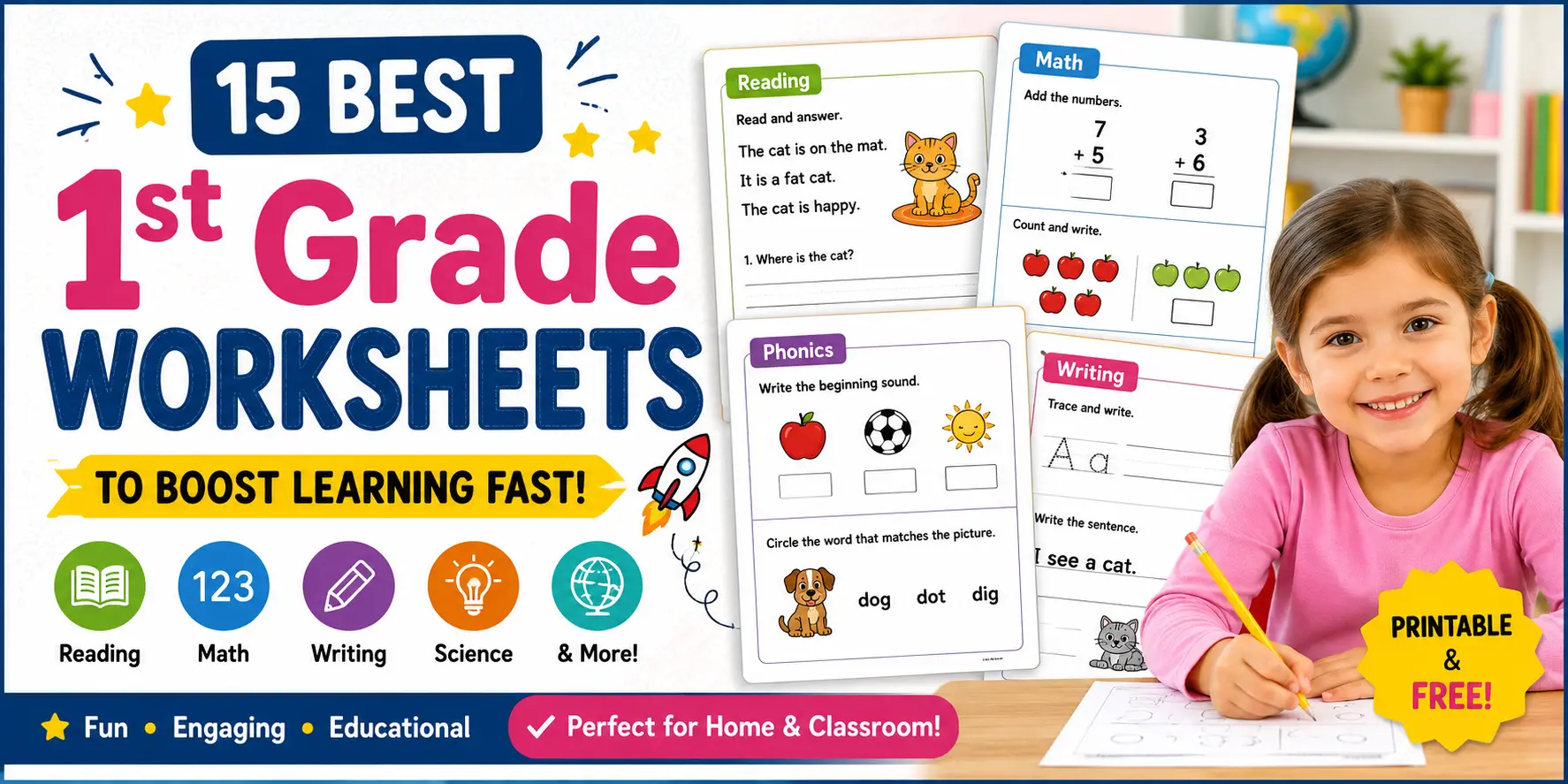
1st Grade Worksheets to Boost Learning Fast
Introduction
1st grade worksheets are one of the most effective tools for helping young learners develop essential academic skills. During first grade, children begin mastering reading, writing, counting, problem-solving, and critical thinking. Well-designed worksheets provide structured practice that reinforces classroom lessons while making learning enjoyable.
Whether you're a parent supporting learning at home or a teacher preparing classroom activities, printable worksheets can save time and improve student confidence. In this guide, you'll discover the best types of first-grade worksheets, their benefits, and tips for using them effectively.
Why 1st Grade Worksheets Matter
Worksheets help children:
Practice important skills repeatedly
Build confidence through independent work
Improve handwriting
Strengthen reading comprehension
Develop math fluency
Enhance critical thinking
Prepare for higher-grade learning
Since first graders have short attention spans, worksheets should be colorful, engaging, and age-appropriate.
Types of 1st Grade Worksheets
Worksheet Type | Skills Developed |
|---|---|
Reading | Phonics, comprehension, vocabulary |
Math | Addition, subtraction, counting |
Writing | Handwriting, sentence formation |
Grammar | Nouns, verbs, punctuation |
Science | Observation, life science |
Social Studies | Community, maps, seasons |
Coloring Activities | Fine motor skills |
STEM Worksheets | Logic and problem-solving |
Reading Worksheets
Reading is one of the biggest milestones in first grade.
Popular worksheet activities include:
Letter sounds
CVC words
Sight words
Reading comprehension
Rhyming words
Story sequencing
Word families
Picture matching
These activities improve vocabulary while encouraging independent reading.
Math Worksheets
Math worksheets help children develop strong number sense.
Common topics include:
Counting to 100
Number recognition
Addition within 20
Subtraction
Skip counting
Comparing numbers
Shapes
Time
Money
Measurement
Hands-on visuals make math easier for young learners to understand.
Writing Worksheets
Writing worksheets improve:
Pencil control
Letter formation
Sentence writing
Creative thinking
Spelling
Capitalization
Punctuation
Many worksheets include tracing activities before moving to independent writing.
Phonics Worksheets
Phonics forms the foundation of reading.
Activities often cover:
Beginning sounds
Ending sounds
Blends
Digraphs
Long vowels
Short vowels
Word families
Decoding practice
Consistent phonics practice helps students become confident readers.
Sight Word Worksheets
High-frequency words appear often in books.
Worksheet activities may include:
Tracing
Coloring
Matching
Word searches
Fill-in-the-blanks
Reading practice
Mastering sight words increases reading fluency.
Science Worksheets
Science activities introduce students to the world around them.
Topics include:
Plants
Animals
Weather
Seasons
The human body
Living vs. nonliving things
Five senses
Simple experiments paired with worksheets create engaging lessons.
Grammar Worksheets
Grammar worksheets teach children how language works.
Lessons may include:
Nouns
Verbs
Adjectives
Pronouns
Capital letters
Periods
Question marks
Sentence order
These foundational skills support stronger writing later on.
Fun Activity Worksheets
Learning doesn't always have to feel like school.
Popular fun worksheets include:
Mazes
Dot-to-dot
Coloring pages
Matching games
Hidden pictures
Crossword puzzles
Cut-and-paste activities
These exercises improve attention, coordination, and problem-solving skills.
Benefits of Printable Worksheets
Printable worksheets offer many advantages.
For Parents
Easy home learning
Affordable educational resources
Flexible schedules
Screen-free activities
For Teachers
Ready-to-use classroom materials
Homework assignments
Skill assessments
Small-group instruction
Tips for Using Worksheets Effectively
To maximize learning:
Keep sessions short (15–20 minutes).
Praise effort as well as correct answers.
Mix worksheet practice with hands-on activities.
Review mistakes together.
Choose worksheets that match your child's skill level.
Make learning fun with stickers or rewards.
Where to Find Free 1st Grade Worksheets & Practice
Many trusted educational websites offer free printable worksheets, including:
Look for resources aligned with your local curriculum and your child's learning needs.
Frequently Asked Questions
What are the best 1st grade worksheets?
The best worksheets cover reading, math, writing, phonics, grammar, and science while remaining engaging and age-appropriate.
How long should a first grader spend on worksheets?
Most experts recommend about 15–20 minutes per session, depending on the child's attention span.
Are printable worksheets effective?
Yes. When combined with hands-on learning and teacher or parent guidance, worksheets reinforce important concepts and build confidence.
Can worksheets replace classroom learning?
No. Worksheets work best as a supplement to classroom instruction, reading, and interactive activities.
How often should first graders complete worksheets?
A few worksheets each week are usually enough to reinforce skills without causing fatigue.
What subjects should first graders practice most?
Reading, phonics, writing, and foundational math are the primary focus areas, with science and social studies added to broaden knowledge.
Conclusion
1st grade worksheets are an excellent way to reinforce essential skills while making learning enjoyable. From reading comprehension and phonics to math, writing, and science, the right worksheets help children practice at their own pace and build confidence for future success.
By choosing engaging, age-appropriate activities and maintaining a consistent routine, parents and teachers can create a positive learning experience that supports academic growth and encourages a lifelong love of learning.
For more queries – Click Here
Comments (0)
Loading comments...