Class 1 Syllabus: Complete Guide for Parents & CBSE Teachers
Summary
The Class 1 syllabus is the first step toward structured education for young learners. At this stage, children begin developing essential literacy, numeracy, communication, and social skills. For parents and CBSE teachers, understanding the syllabus helps create a supportive and enjoyable learning environment.
According to the latest CBSE and NCERT-aligned curriculum, Class 1 focuses on activity-based learning, storytelling, play, and real-world experiences rather than rote memorization.
Introduction to the CBSE Class 1 Curriculum
The CBSE curriculum for Class 1 follows the goals of the National Education Policy (NEP) 2020 and National Curriculum Framework (NCF). The focus is on:
- Foundational literacy
- Foundational numeracy
- Communication skills
- Creativity
- Emotional development
- Social interaction
Children learn best through games, songs, pictures, and hands-on activities at this age.
Importance of Foundational Learning in Class 1
Class 1 is often called the “foundation stage” because it shapes a child’s future academic journey. Early learning experiences help children:
- Build confidence
- Improve concentration
- Develop language abilities
- Understand numbers and patterns
- Learn teamwork and discipline
Experts believe strong foundational learning improves long-term academic success.
CBSE Class 1 English Syllabus Explained
The English syllabus introduces children to simple words, sentence formation, listening, and speaking skills.
Reading Skills
Students learn:
- Alphabet recognition
- Picture reading
- Rhymes
- Short stories
- Sight words
Storytelling and reading aloud improve vocabulary and pronunciation.
Writing Skills
Children practice:
- Letter tracing
- Word writing
- Copy writing
- Simple sentences
Grammar Basics
Basic grammar concepts include:
- Naming words
- Action words
- Singular and plural
- Opposites
The NCERT “Mridang” book is commonly used for English learning.
CBSE Class 1 Maths Syllabus Explained
Mathematics in Class 1 focuses on developing number sense through visual and practical learning.
Numbers and Counting
Students learn:
- Counting 1–100
- Number names
- Before-after numbers
- Greater and smaller numbers
Shapes and Patterns
Children identify:
- Circles
- Squares
- Triangles
- Rectangles
- Simple patterns
Addition and Subtraction
Simple operations using pictures and objects help children understand basic calculations.
The syllabus encourages logical thinking and problem-solving through activities.
CBSE Class 1 Hindi Syllabus Explained
Hindi learning helps children improve expression and communication in their mother tongue or second language.
Swar and Vyanjan
Students begin with:
- स्वर (Vowels)
- व्यंजन (Consonants)
- Letter recognition
- Word building
Rhymes and Storytelling
Hindi poems and stories improve:
- Listening skills
- Pronunciation
- Creativity
- Confidence
The NCERT “Sarangi” book is often recommended.
EVS Topics for Class 1
Environmental Studies (EVS) helps children understand the world around them.
Common topics include:
- My family
- My school
- Plants and animals
- Food and water
- Seasons
- Good habits
- Safety rules
Learning is mostly activity-based and observation-driven.
Teaching Strategies for Parents and Teachers
Parents and teachers play a huge role in a child’s early education.
Effective Strategies
- Use storytelling methods
- Encourage reading habits
- Teach through games
- Use flashcards and visuals
- Avoid pressure and comparison
- Appreciate small achievements
Positive reinforcement builds confidence and curiosity.
Best Study Resources for Class 1 Students
Using the right resources can make learning fun and effective.
Recommended Resources
- NCERT Textbooks
- Activity worksheets
- Flashcards
- Educational apps
- Storybooks
- Interactive videos
Useful Learning Resources
Free Class 1 Learning Resources
Download Worksheets, NCERT PDFs & Activity Sheets
👉 Access Free Class 1 Study Resources Here
These resources include:
- NCERT textbooks
- Printable worksheets
- Practice activities
- Story-based learning materials
links:- https://www.thesuperc.com
Common Challenges Faced by Students
Some Class 1 students may struggle with:
- Writing neatly
- Recognizing letters
- Number confusion
- Attention span issues
- Classroom adjustment
Patience, encouragement, and regular practice can help children overcome these challenges.
Assessment Pattern in Class 1
Most CBSE schools avoid formal exams in early grades. Instead, assessment is based on:
- Classroom participation
- Oral activities
- Worksheets
- Observation
- Projects
- Simple tests
The goal is continuous improvement rather than marks.
click:- Start today now
Benefits of Activity-Based Learning
Activity-based learning makes education enjoyable and meaningful.
Advantages
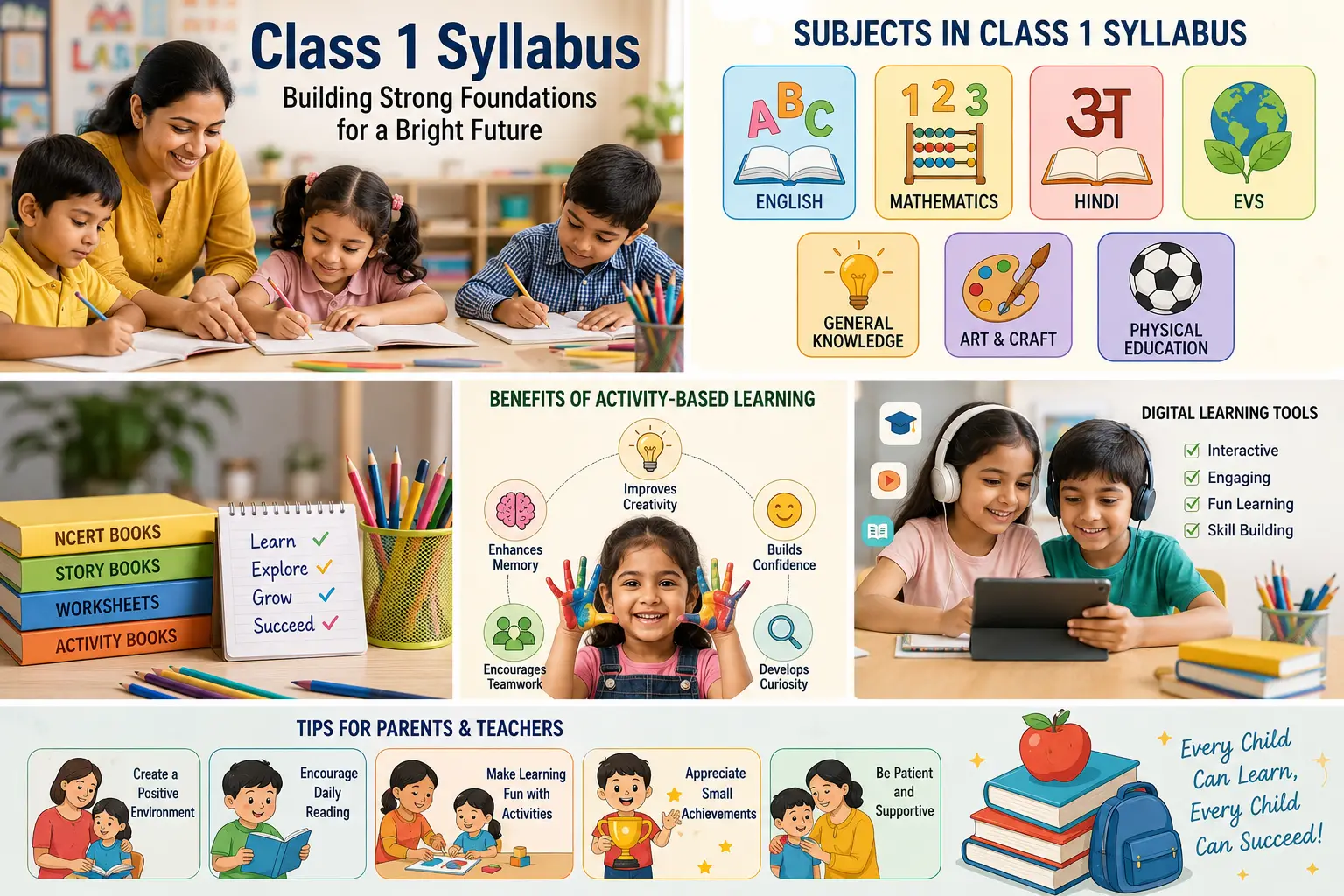
- Improves creativity
- Enhances memory
- Builds communication skills
- Encourages teamwork
- Develops curiosity
Research shows children retain concepts better through practical experiences.
Digital Learning Tools and Apps
Technology can support early learning when used wisely.
Popular Educational Platforms
- DIKSHA
- Khan Academy Kids
- YouTube Kids educational channels
- Interactive phonics apps
Parents should monitor screen time and choose age-appropriate content.
Frequently Asked Questions (FAQs)
1. What subjects are included in the Class 1 syllabus?
English, Maths, Hindi, EVS, GK, Art & Craft, and Physical Education are commonly included.
2. Is there any board exam in Class 1?
No, CBSE does not conduct board exams for Class 1 students.
3. Which books are recommended for Class 1 CBSE students?
NCERT books such as Mridang, Joyful Mathematics, and Sarangi are widely used.
4. How can parents help Class 1 children study?
Parents can use games, stories, daily conversations, and positive encouragement.
5. What is the best learning method for Class 1 students?
Play-based and activity-based learning methods work best.
6. Are digital learning apps useful for Class 1 children?
Yes, educational apps can improve engagement when used in moderation.
Conclusion
The Class 1 syllabus is designed to create a joyful and meaningful learning experience for children. Instead of academic pressure, the focus is on curiosity, communication, creativity, and foundational skills.
For parents and CBSE teachers, understanding the curriculum helps provide the right guidance and support during this important stage of learning. With engaging activities, quality resources, and positive encouragement, children can develop confidence and a lifelong love for learning.
For more queries – Click Here
Comments (0)
Loading comments...