Welcome to SuperC
Sign in to access your dashboard
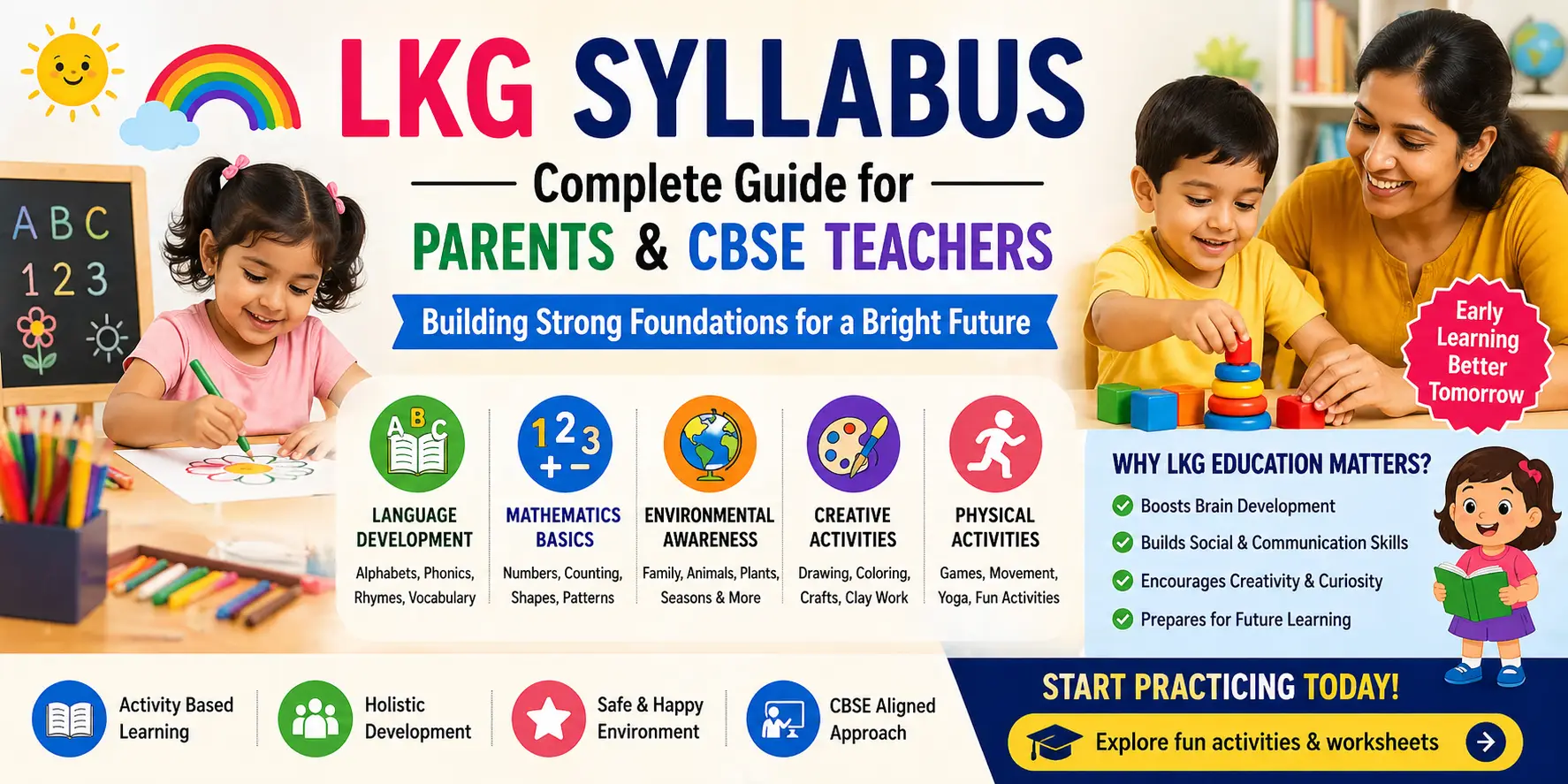
LKG Syllabus: Complete Guide for Parents & CBSE Teachers
Introduction to LKG Education
The LKG Syllabus: Complete Guide for Parents & CBSE Teachers is designed to build a strong foundation for young learners. At this stage, children are like little explorers—curious, energetic, and eager to learn new things every day. A well-structured syllabus ensures they develop essential cognitive, emotional, and social skills.
LKG (Lower Kindergarten) is not just about learning alphabets or numbers—it’s about shaping a child’s personality. Schools following CBSE guidelines focus on activity-based learning rather than rote memorization, making education fun and meaningful.
What is LKG?
LKG typically includes children aged 3 to 4 years. It acts as a bridge between home and formal schooling.
Purpose and Goals
Develop basic communication skills
Improve motor skills
Encourage creativity
Build social interaction
Role of Early Education
Early childhood education plays a crucial role in brain development. Studies show that 90% of brain growth happens before age 5, making LKG one of the most critical stages.
Subjects Covered in LKG Syllabus
The LKG syllabus is carefully designed to cover multiple learning areas without overwhelming the child.
Language Development
Language skills are the backbone of learning.
English Skills
Alphabet recognition (A–Z)
Phonics sounds
Basic vocabulary
Rhymes and storytelling
Children learn best through repetition and fun activities like singing rhymes or listening to stories.
Start Free Practicing Today :- https://www.thesuperc.com
Mathematics Basics
Math in LKG is all about understanding numbers in a playful way.
Practical Math Activities
Counting objects (1–20)
Identifying shapes (circle, square, triangle)
Recognizing patterns
Sorting and grouping
Hands-on activities like counting toys or arranging blocks make math enjoyable.
Start Free Practicing Today :- https://www.thesuperc.com
Environmental Awareness
Kids are introduced to their surroundings.
Family members
Animals and birds
Plants and seasons
Basic hygiene habits
This helps children connect classroom learning with real life.
Activity-Based Learning Approach
Gone are the days of boring lectures—LKG thrives on activity-based learning.
Creative Activities
Drawing and coloring
Paper crafts
Clay modeling
These activities improve imagination and fine motor skills.
Physical Activities
Outdoor games
Dance and movement
Yoga for kids
Physical play boosts coordination and overall health.
Teaching Methods for CBSE Teachers
Teachers play a vital role in shaping young minds.
Interactive Teaching Techniques
Storytelling sessions
Flashcards and charts
Group activities
Use of Technology
Smart boards
Educational apps
Animated videos
Modern tools make learning more engaging and effective.
Assessment in LKG
Assessment in LKG is not about exams—it’s about understanding progress.
Continuous Observation
Teachers observe:
Participation
Behavior
Skill development
Non-Exam Evaluation
Worksheets
Activities
Oral responses
Tips for Parents
Parents are the child’s first teachers.
Daily Routine
Fixed study time
Playtime balance
Proper sleep schedule
Learning Through Play
Puzzle games
Storybooks
Educational toys
Consistency at home reinforces classroom learning.
Common Challenges in LKG Learning
Attention Span
Young children have short attention spans. Keep activities short and engaging.
Emotional Development
Some children may feel shy or anxious. Encourage them with positive reinforcement.
Benefits of Structured LKG Syllabus
Builds strong academic foundation
Improves communication skills
Enhances creativity
Develops social confidence
A good LKG syllabus prepares children for lifelong learning.
FAQs
1. What is the ideal age for LKG admission?
Children between 3–4 years are ideal for LKG.
2. Is homework necessary in LKG?
Minimal homework is recommended, focusing on fun learning.
3. How can parents support LKG learning at home?
By reading stories, engaging in play-based learning, and maintaining routines.
4. Are exams conducted in LKG?
No formal exams; assessment is activity-based.
5. What skills should a child learn in LKG?
Basic language, math, social, and motor skills.
6. Is CBSE LKG syllabus different from other boards?
CBSE focuses more on activity-based and holistic development.
Conclusion
The LKG Syllabus: Complete Guide for Parents & CBSE Teachers highlights the importance of early education in shaping a child’s future. With the right balance of academics, activities, and emotional support, children can thrive and develop a love for learning.
Start Free Practicing Today
Want to help your child excel in LKG?
👉 Start free fun learning activities today: https://www.thesuperc.com
👉 Download free printable worksheets: https://www.thesupercbooks.com
Don’t wait—early learning starts now!
For more queries – Click Here
Comments (0)
Loading comments...