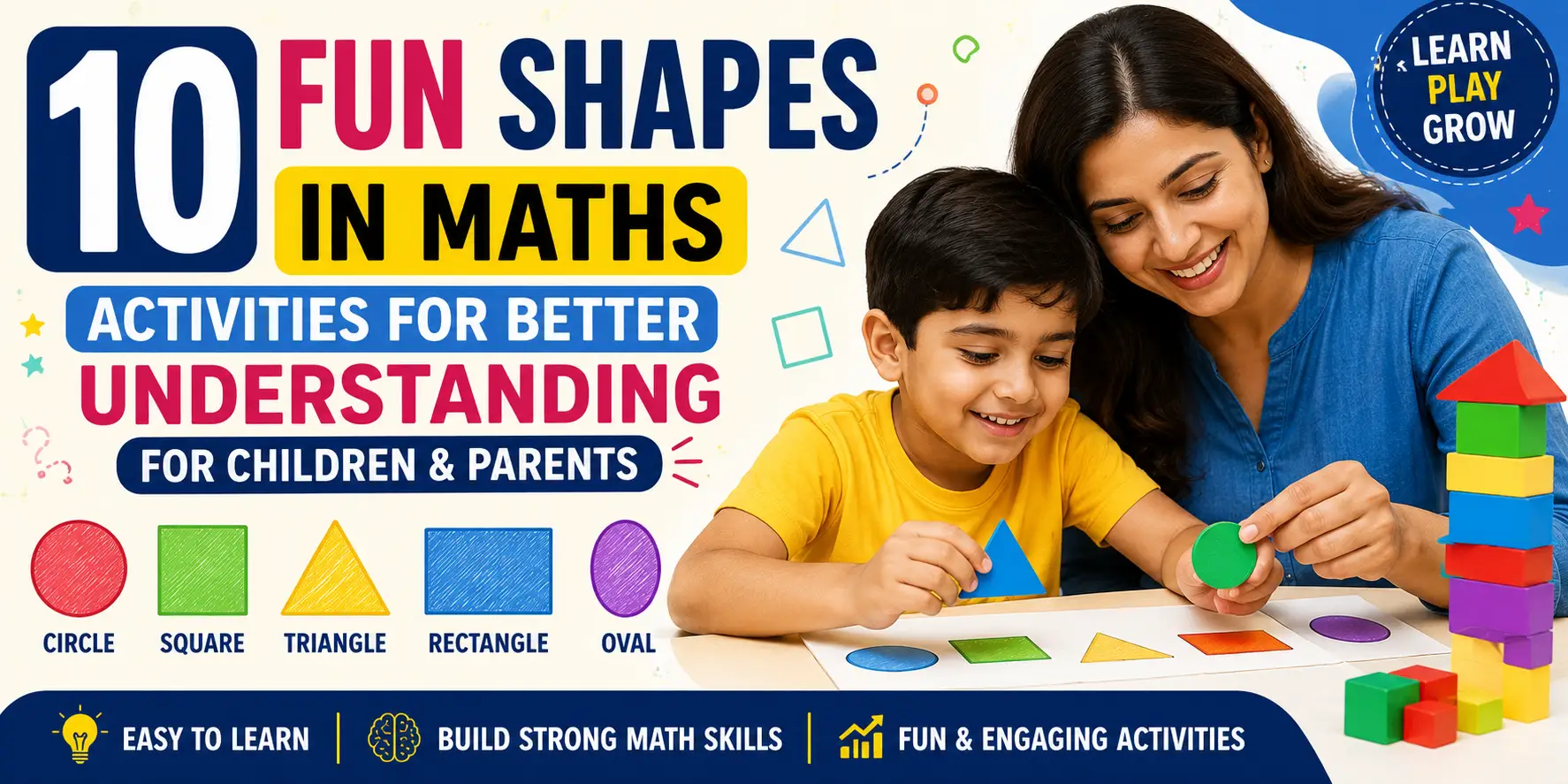
Shapes in Maths for Better Understanding
Introduction
Shapes in maths are one of the first concepts children learn. Understanding shapes helps kids recognize objects around them, improve problem-solving skills, and build a strong foundation for geometry. Parents also play an important role in making shape learning fun and interactive. By exploring shapes together, children can develop confidence and enjoy mathematics from an early age.
Why Are Shapes in Maths Important?
Shapes are everywhere. From a clock on the wall to a pizza slice, geometry is part of everyday life. Learning shapes helps children:
Improve visual and spatial skills.
Develop logical thinking.
Recognize patterns and objects.
Build a foundation for advanced mathematics.
Increase creativity through drawing and crafts.
Basic Shapes Every Child Should Know
1. Circle
A circle is round and has no corners. Examples include coins, wheels, and clocks.
2. Square
A square has four equal sides and four corners. Examples include windows and tiles.
3. Triangle
A triangle has three sides and three corners. Traffic signs and pizza slices are common examples.
4. Rectangle
A rectangle has four sides with opposite sides equal. Doors, books, and television screens are rectangular.
5. Oval
An oval looks like a stretched circle. Eggs and mirrors often have oval shapes.
Fun Activities for Parents and Children
Shape Hunt Around the House
Ask children to find objects that match different shapes. This activity improves observation skills and makes learning enjoyable.
Drawing and Coloring Shapes
Children can draw circles, squares, triangles, and rectangles and color them with bright colors.
Building with Blocks
Using building blocks helps children understand how shapes fit together.
Shape Sorting Games
Sort toys or objects according to their shapes to improve classification skills.
Making Shape Crafts
Cut colored paper into different shapes and create animals, houses, or flowers.
How Parents Can Support Learning
Parents can make shape learning easier by:
Reading books about shapes.
Using shape names in daily conversations.
Playing educational games.
Encouraging drawing and creativity.
Practicing regularly with patience and praise.
Real-Life Examples of Shapes
Shape | Example | Online Practice Links |
|---|---|---|
Circle | Clock, Coin | |
Square | Chessboard, Tile | |
Triangle | Pizza Slice, Road Sign | |
Rectangle | Book, Door | |
Oval | Egg, Mirror |
Benefits of Learning Shapes in Maths
Enhances problem-solving skills.
Develops hand-eye coordination.
Builds confidence in mathematics.
Encourages creativity and imagination.
Improves observation and memory.
Common Mistakes Children Make
Some children may confuse squares with rectangles or circles with ovals. Parents should use real objects and repeated practice to help children recognize differences.
FAQs
Why are shapes important in maths?
Shapes help children understand geometry, patterns, and spatial relationships.
At what age should children learn shapes?
Most children begin recognizing basic shapes between ages 2 and 4.
How can parents teach shapes at home?
Parents can use toys, books, drawing activities, and household objects to teach shapes.
What are the basic shapes in maths?
Circle, square, triangle, rectangle, and oval are the most common basic shapes.
How do shape activities improve learning?
They enhance observation, creativity, and problem-solving skills.
Can learning shapes help in everyday life?
Yes. Shapes are found everywhere and help children understand the world around them.
Conclusion
Shapes in maths are essential for a child's early development. With the support of parents and fun activities, children can easily understand and enjoy learning shapes. Making shape learning interactive and practical helps build strong mathematical skills that benefit children throughout their education and daily life.
For more educational resources, visit www.thesuperc.com
For more queries – Click Here
Comments (0)
Loading comments...